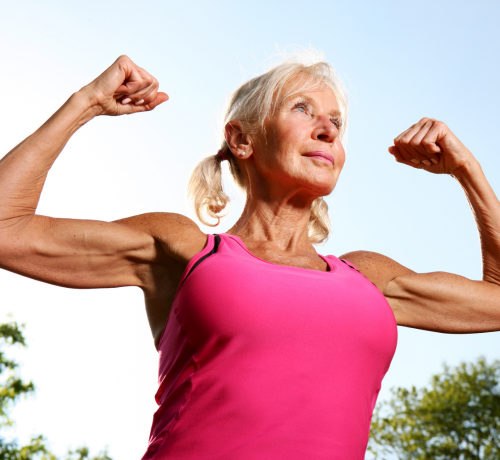
There is a version of you five years from now who moves well, feels strong, has energy to burn, and genuinely is not worried about what ageing is doing to her body.
She lifts things without thinking. She walks into a room with her shoulders back. She sleeps well and wakes up ready. She can sprint for the bus, carry her groceries, hike on holiday, and keep up with her children/grandchildren. She is not managing decline. She is building capacity.
That version of you is not a fantasy. She is the logical result of training the right way, consistently, for a body that has been understood rather than ignored.
Most training programs do not understand women’s bodies. They were not designed to. They were built for men in their 20s and handed to the rest of us as if the biology is interchangeable.
It isn’t
Here’s something most women don’t know: for decades, the foundational research underpinning exercise science was conducted almost exclusively on men — young men, typically university students. Studies on training volume, intensity, recovery, cardiovascular conditioning, and strength adaptations were built on male subjects, and the findings were simply scaled down and applied to women. Not because anyone thought that was ideal. Because women were considered too complicated — the hormonal variability across a menstrual cycle was seen as a confounding variable. So researchers removed it from the equation. And then handed women the results anyway.
The consequences of that shortcut are still playing out in gyms and fitness studios everywhere. Women are still being given training programs rooted in male physiology. They’re still being told to do more cardio, and work harder, without any consideration of the impact this is having on women’s hormones, joints, and pelvic floors.
The good news: that’s changing. A growing body of research — led by scientists specifically studying women’s physiology, hormones, and the unique demands of menstruation, perimenopause and menopause — is rewriting what we know. And what it tells us is surprisingly specific. Not “exercise more.” Not “lift some weights and do some cardio.” Specific physical qualities, trained in specific ways, for specific physiological reasons.
This series is about exactly that.
The Six Things Women Need
Over the next seven blogs, we are going to go deep on each of the following with the research, the reasoning, and what it actually looks like in practice.
- Heavy progressive strength training
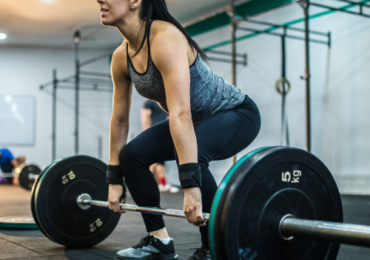
Not light weights and high reps. Genuinely challenging loads that build and protect muscle mass, maintain bone density, and drive the hormonal and metabolic adaptations that keep your body functioning well for decades. Dr Gabrielle Lyon calls skeletal muscle “the organ of longevity” and the research backs her up. This is the foundation of everything.
- The right type of cardio not just more of it
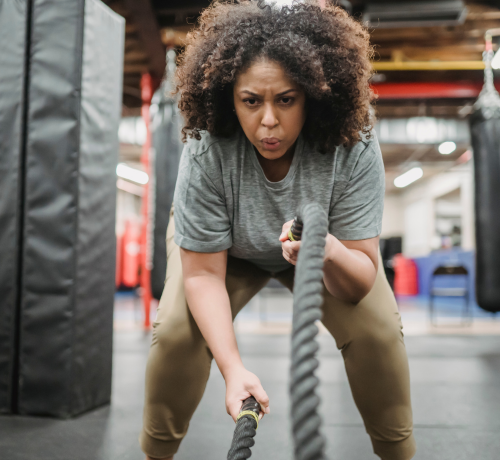
Long, moderate-intensity sessions elevate cortisol without delivering the adaptations women need. Short, high-intensity intervals at 80 to 90 percent of max effort produce dramatically better outcomes: improved cardiovascular fitness, better insulin sensitivity, improved body composition, and none of the cortisol-driven consequences of chronic steady-state work. For women navigating perimenopause, this distinction is everything.
- Power training and plyometrics
Strength and power are not the same thing and power declines faster. It is what lets you catch yourself when you stumble, move quickly, jump, land safely, and live with physical confidence. Most programs drop it entirely. The research says it is non-negotiable, especially for bone density and fall prevention.
- Balance and single leg stability
Falls are one of the leading causes of injury, hospitalisation and lost independence in women over 50. Balance is a trainable quality and research shows it needs to be trained deliberately, not just hoped for. Single-leg strength work, neuromuscular drills and stability challenges deliver the kind of coordination that protects you for life.
- Mobility strength through full range of motion
Not flexibility for its own sake. Mobility is the ability to produce and control force through a complete range of motion. As oestrogen declines, connective tissue stiffens, ranges of motion narrow, and compensatory movement patterns take hold. Addressing this deliberately through warm-up design, exercise selection and coaching is what keeps all the other physical qualities accessible.
- Multicomponent phased programming
All five of the above, structured together: not as isolated sessions or random workouts, but as a progressive, phased program that builds each quality in the right sequence, at the right time. The research consistently shows that multicomponent training produces outcomes no single-modality approach can match.
Why Most Programs Only Tick One Or Two Boxes
Here is what makes the science confronting for a lot of women: most of the things they have been doing consistently, even things they enjoy and feel good about, only address one or two of these qualities.
Yoga gives you flexibility and recovery. Pilates gives you core stability and posture. Walking gets you moving and provides mild cardiovascular benefit. High-intensity group classes give you conditioning, and maybe some strength. Each of these has real value. None of them, individually, comes close to ticking all six boxes.
And the training that does tick all six boxes, the kind designed specifically for how women’s bodies actually work at 40, 50, 60 and beyond, is still not what most studios and gyms are delivering.
That gap has real consequences. Not dramatic, immediate ones. Quiet, accumulating ones. Less muscle mass than you should have. Bone density that is declining faster than it needs to. Power and balance deteriorating in the background. A body that is working harder than it has to, without quite getting the results it should.
We built STRONG and FIT to close that gap.
What We Built And Why
Our timetable runs STRONG sessions on Monday, Wednesday and Friday and FIT sessions on Tuesday and Thursday. That structure is not arbitrary. It is designed to deliver consistent exposure to all six physical qualities, with the recovery time the research says women’s bodies need between sessions of the same primary focus.
STRONG sessions lead with heavy progressive strength training, with power, plyometrics, balance and cardiovascular conditioning threaded through every session.
FIT sessions lead with high-intensity conditioning, with strength, power, balance and mobility built in throughout.
The result: whichever sessions you make on any given week, your body is never fully missing any of the stimuli it needs. STRONG is not just a weights session. FIT is not just cardio. They are both comprehensive, just with a different primary emphasis on the day.
Layered over this is phased, progressive programming, so the sessions do not just respond to what your body needs today. They build toward where you want to be in six months, twelve months, and ten years.
What Is Coming In This Series
Over the next six blogs, we are going deep on each of these topics. If you have ever wanted to understand the why behind how we train, or why what you have tried before has not quite delivered what you hoped, these blogs are for you.
Blog 2 – Why lifting heavy is the most important thing a woman can do for her health
Blog 3 – Why the type of cardio you do matters more than how much you do
Blog 4 – Power plyometrics and balance the physical qualities most programs quietly drop
Blog 5 – Mobility why it is not stretching and why it changes everything
Blog 6 – What phased programming actually means and why it gets you better results than random training
Blog 7 – How STRONG and FIT deliver all of this every session every week
If you want to understand your body better, train smarter, and build something that lasts, start here.
If you’ve got questions, send them to support@strongwomencan.com or come visit us at our Women’s Training studio in Highett, Bayside – we’re always happy to help.