
The scale is moving. The cravings have quieted down. You’re finally feeling like something is actually working.
Here’s the part your doctor probably didn’t mention on the way out: roughly 25–40% of the weight lost on GLP-1 medications comes from muscle, not fat. Not because the medication is doing anything wrong – that’s just what happens to the body in a significant calorie deficit. But the appetite suppression these medications cause makes it easier to under-eat the things your body needs to hold onto muscle, which compounds the problem.
For women, especially those over 30, where muscle loss begins to accelerate with age – this is worth understanding. Muscle is your metabolism. Your bone health. Your energy, your strength, your long-term independence.
Losing fat is the goal. Losing muscle alongside it is the part worth paying attention to.
What the Research Points To
Resistance Training
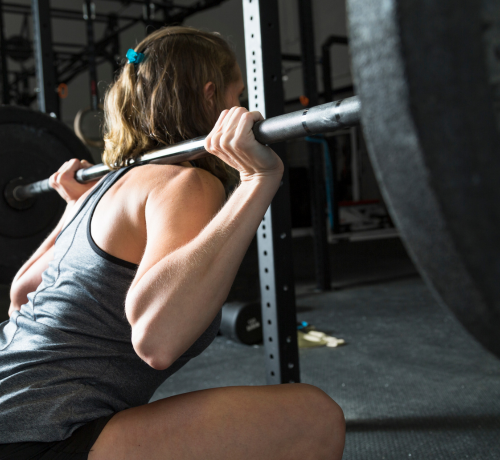
When your body is in a calorie deficit, it needs a reason to hold onto muscle. Resistance training is that reason. It sends a signal: this tissue is being used, keep it. Without it, muscle loss during weight loss is pretty much the default outcome.
A 2025 study of 200 adults who combined resistance training with their GLP-1 medication found they lost around 13% of their body weight – but only about 3% came from muscle mass. That’s a dramatically different result compared to medication alone.
Two to three sessions a week covering the major muscle groups – legs, glutes, back, chest, shoulders. Squats, deadlifts, hip thrusts, rows, presses. The research on this is consistent: if the goal is fat loss while protecting muscle, this is the most effective thing you can stack alongside the medication.
One thing the research is equally clear on: the training needs to actually challenge the muscles. Light weights and gentle movement won’t trigger the adaptation your body needs to hold onto lean mass. The sessions don’t need to be long, but the last few reps of each set should feel genuinely hard. That’s the threshold where the muscle-preserving signal happens.
What that looks like day to day – at home, in a gym, with a coach, on your own – is a different question entirely.
Protein
The appetite suppression that makes GLP-1s effective is also the thing that can work against you here.
When you’re not very hungry, it’s easy to under-eat protein without realising it. And protein is what muscle is built from – so if the training is happening but protein isn’t, the body doesn’t have the raw materials to do much with it.
Current research points to roughly 1.2 to 2.0 grams of protein per kilogram of body weight per day. For a woman weighing 75kg, that’s somewhere between 90 and 150 grams. When appetite is suppressed, hitting that number takes deliberate effort.
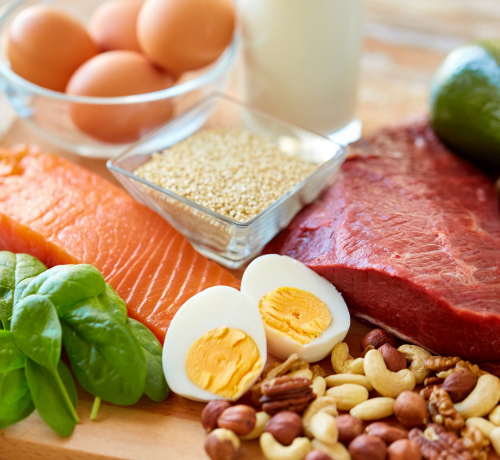
Lead with protein at every meal rather than fitting it in around everything else. Eggs, Greek yogurt, cottage cheese, chicken, fish, tofu, legumes – the everyday staples. When eating feels like a lot, protein-dense lower-volume foods cover more ground than high-volume meals. A protein shake isn’t exactly fine dining, but it does the job without requiring much stomach real estate.
Bone Health
A 2024 clinical trial published in JAMA Network Open split participants into three groups over a year: exercise only, GLP-1 medication only, and GLP-1 medication combined with exercise. The group on medication without exercise saw bone mineral density decline at the hip and spine. The group combining medication with exercise had the greatest weight loss and preserved bone density.
The reason: rapid weight loss reduces mechanical load on the skeleton, which can trigger bone resorption. For women who are postmenopausal or heading that way, where bone density is already under pressure from declining oestrogen, this is particularly relevant.
Weight-bearing and resistance exercise directly counteract this – which is another reason the training piece matters beyond just muscle. So does keeping up with calcium and vitamin D, which can easily slip when overall food intake drops.
If bone health is already on your radar, it’s worth raising with your GP. A DEXA scan before and after starting medication gives you real data rather than guesswork.
Daily Movement
Structured training sessions matter. So does everything in between.
Regular walking on top of resistance sessions supports cardiovascular health, helps with energy levels, and contributes to the body actually using dietary protein for muscle maintenance rather than burning it for fuel. Overall daily activity – not just formal exercise – plays a meaningful role.
GLP-1s can occasionally cause fatigue, particularly early on. If energy is low, lowering intensity on those days is completely reasonable. Consistency over time matters more than any single session.
Sleep and Stress
Poor sleep elevates cortisol, which accelerates muscle breakdown and makes fat loss harder. Chronic stress does the same. Seven to nine hours of quality sleep, and genuinely managing stress rather than just acknowledging it — these sit underneath everything else and are worth treating that way.
A Client Story
One of our members (let’s call her Jade) had been on a GLP-1 for about six months when she came to us. The weight was coming off. But she felt softer, more tired, and weaker than she’d expected. Something felt off, even though the scale was doing exactly what it was supposed to.
A few months of consistent strength training and some focused attention on protein shifted that. Jade got strong again. Energy came back. Her body changed in a way that felt genuinely different – not just a smaller version of herself, but a more capable one.
Losing weight and losing fat aren’t the same thing. The difference in how you feel is significant.
How We Can Help
At Strong Women Can, we work with women at every stage of their health journey – including women on GLP-1 medications.
We understand the physiology: the hormonal picture, the muscle loss risk, the bone health piece, and the way appetite suppression makes good nutrition harder to action in practice. Our coaching is built around helping you get the full benefit from everything you’re putting into your health – not just a smaller number on the scale, but a body that’s stronger, more resilient, and built to stay that way.